Useful Information about the Everest Base Camp Trek
Planning a 12-day Everest Base Camp Trek involves more than following the itinerary. It helps to know how the Lukla flights operate, what accommodation is like, what food is available, which documents and permits are needed, how to prepare for altitude, and what personal expenses to expect. The information below covers the practical details that can help you prepare for the trek, from your arrival in Kathmandu to your return from the Everest region.
Before Your Everest Base Camp Trek
Before starting your 12-day Everest Base Camp Trek, it is important to complete a few practical arrangements in Kathmandu. Himalayan Ecological Trekking helps you get settled after arrival, reviews the trekking plan with you and makes sure you are prepared for the journey to the Everest region.
Airport Pick-up and Hotel Transfer in Kathmandu
After your arrival at Tribhuvan International Airport (TIA), Kathmandu, our representative will meet you at the airport and arrange your transfer to the hotel. Please provide your confirmed flight details before arrival so that we can coordinate the pick-up. Once you reach the hotel, you can rest, freshen up and prepare for the trek.
Everest Base Camp Trek Pre-Trek Briefing in Kathmandu
Himalayan Ecological Trekking holds a pre-trek briefing in Kathmandu before you leave for the Everest region. It is an opportunity to go through the practical details of your 12-day trek and ask any remaining questions. The briefing covers:
- The 12-day trekking itinerary and expected walking hours
- The route, altitude and general trail conditions
- Trekking equipment and any last-minute gear requirements
- Teahouse accommodation and meal arrangements
- Guide, porter and staff arrangements
- Lukla flight arrangements and possible flight disruptions
- Trekking permits and required documents
- General safety and altitude considerations
This briefing also gives you an opportunity to meet your trekking team and make sure your main preparations are complete before departure.
Lukla Flight Details for the Everest Base Camp Trek
The Lukla flight is an important part of the standard Everest Base Camp Trek. Depending on the operating arrangement for your travel date, flights may depart from Tribhuvan International Airport (TIA) in Kathmandu or Manthali Airport in Ramechhap. Flight schedules can change because of weather, air traffic and operational conditions in the mountains. Your final departure airport and reporting time should therefore be confirmed before the trek.
Lukla Flight from Kathmandu (Tribhuvan International Airport – TIA)
When flights operate from Kathmandu, you travel directly from TIA to Tenzing-Hillary Airport in Lukla. The flight is short, but mountain weather can change quickly. Cloud, wind and visibility can affect the flight schedule, so avoid making important onward arrangements that depend on an exact Lukla arrival time.
Arrive at the airport according to the latest instructions provided by your airline or trekking company and keep your baggage within the permitted limit.
Lukla Flight from Manthali Airport, Ramechhap
When Lukla flights operate from Manthali Airport, you first travel by road from Kathmandu to Ramechhap. The road journey takes several hours, and travellers with early morning flights may need to leave Kathmandu during the night or very early in the morning. The exact transfer time depends on road and traffic conditions.
Manthali is a smaller airport than TIA, so allow enough time for check-in and follow the latest reporting instructions for your flight.
Baggage Allowance for the Lukla Flight
Lukla flights have strict baggage limits because they use small aircraft with limited capacity. A typical allowance is around 15 kg per passenger in total, although the exact limit may vary according to the flight operator and current operating arrangements.
- Checked baggage: Approximately 10 kg per passenger, check your confirmed flight details.
- Hand baggage: Approximately 5 kg per passenger, keep essential items with you.
- Excess baggage: Subject to availability and additional charges.
- Essential items: Keep your passport, travel documents, medicines, valuables and other important items in your hand baggage.
- Extra luggage: Non-essential luggage can usually be stored safely in Kathmandu while you are on the trek, depending on your accommodation or luggage storage arrangements.
Lukla Flight Delays and Cancellations
Flights to Lukla can be delayed, rescheduled or cancelled because of cloud, strong wind, poor visibility, changing mountain weather or operational conditions.
A delay does not necessarily mean that your trek will be cancelled. Your guide and trekking company can help manage the change and adjust the arrangements when necessary.
To reduce the impact of a flight disruption:
- Keep some flexibility in your wider Nepal travel schedule.
- Check the latest flight information before going to the airport.
- Avoid booking an important international connection immediately after your expected return from Lukla.
- Keep your essential medicines and important documents with you.
- Follow the instructions provided if your flight is rescheduled or cancelled.
An additional day in your overall Nepal travel plan can be useful when your itinerary depends on mountain flights.
Practical Tip for Lukla Flights
Pack only the essentials you need for the Everest Base Camp Trek and leave non-essential luggage safely in Kathmandu. Check your baggage weight before heading to the airport, and keep important items such as your passport, medicines, money and valuables in your hand baggage.
Accommodation during the Everest Base Camp Trek
Accommodation on the 12-day Everest Base Camp Trek includes a hotel in Kathmandu and teahouses or trekking lodges in the Khumbu. Teahouse standards vary according to location. You can generally expect better facilities in larger settlements such as Namche Bazaar, while accommodation becomes simpler at higher elevations, particularly around Lobuche and Gorak Shep.
Accommodation in Kathmandu
Before and after the trek, you stay in a tourist-standard hotel in Kathmandu. Most hotels in central tourist areas provide private rooms, attached bathrooms, hot showers, electricity and Wi-Fi. Kathmandu is also the best place to organize anything you may need before the trek, including last-minute trekking gear, toiletries, medicines and personal supplies. Your pre-trek briefing is normally held here before you leave for the Everest region.
The exact hotel and room category may vary depending on your package and availability. For the most accurate information, check the accommodation included in your selected trek package.
Teahouse Accommodation on the Everest Base Camp Trek
The Everest Base Camp Trek is normally completed as a teahouse trek. Instead of camping, you stay in locally operated mountain lodges along the route.
Most teahouses provide:
- Twin-sharing rooms
- Beds and mattresses
- Pillows and blankets
- Shared or private bathroom facilities, depending on the lodge
- A communal dining area
- Basic electricity
- Hot drinks and meals
Facilities become more basic as you gain altitude. At lower elevations, some lodges may offer private rooms and attached bathrooms. At higher elevations, shared rooms and bathrooms are more common.
The communal dining room is usually the main place for eating and relaxing in the evening. In colder villages, the dining area may be heated or warmed by a central stove when conditions allow.
Facilities and Services in Trekking Lodges
Facilities vary between villages and individual lodges. In general, you can expect more comfort at lower elevations and fewer facilities as you approach Everest Base Camp.
What to Expect on the EBC Trek?
-
Room Types and Sleeping Arrangements
Twin-sharing rooms are the standard arrangement for most trekkers. A typical room has two beds with mattresses, pillows and blankets. Private rooms may be available at some lodges, but availability is limited, particularly during the busy spring and autumn seasons. The higher you go, the fewer room choices you are likely to find. A warm sleeping bag rated for the expected temperatures is recommended even when blankets are provided.
-
Toilet and Bathroom Facilities
Bathroom facilities vary between lodges. Some lower-altitude teahouses may have attached bathrooms, while shared toilets are more common at higher elevations. Around Lobuche and Gorak Shep, facilities are generally basic. Carry your own toilet paper, hand sanitiser and personal toiletries throughout the trek.
Hot showers are available at many teahouses but usually cost extra. The availability and price of hot showers can change with altitude, lodge facilities and the availability of hot water. At higher elevations, showers can be limited and more expensive. Because temperatures are low at higher elevations, many trekkers prefer a quick wash rather than a full shower.
-
Electricity and Device Charging
Electricity is available at many teahouses, but power supply and charging facilities vary. Charging phones, cameras and other devices may cost extra, particularly in higher villages. Power can also be affected by weather or local supply conditions. A power bank is useful, especially when you rely on your phone for photographs, communication or navigation.
-
Wi-Fi and Internet Access
Wi-Fi is available in many lodges, particularly in larger settlements such as Namche Bazaar. Connection quality can vary and may become slower or less reliable as you gain altitude. Some lodges charge separately for Wi-Fi access. Do not rely on continuous internet access throughout the trek.
Mobile coverage varies along the Everest Base Camp route. Larger settlements generally have better connectivity, while some remote or higher sections may have weak or intermittent signals. A local SIM or suitable mobile data plan can be useful, but there may still be areas without reliable coverage.
Accommodation during Peak Trekking Seasons
The busiest periods are generally spring (March to May) and autumn (September to November). During these seasons, popular overnight stops such as Namche Bazaar, Dingboche, Lobuche and Gorak Shep can become busy. Advance accommodation arrangements are therefore important.
Our team arranges accommodation according to your itinerary, but the exact lodge can depend on availability and local operating conditions. During winter and monsoon, there are fewer trekkers, although weather conditions can affect both lodge operations and flight schedules.
Food and Drinks during the Everest Base Camp Trek
Teahouses along the Everest Base Camp route serve a mixture of Nepali, Sherpa, Tibetan-influenced and international dishes. The range of choices is generally wider in Lukla and Namche Bazaar and becomes simpler at higher elevations, where transporting food and supplies is more difficult.
What Food Can You Eat During the Everest Base Camp Trek?
You can find a good variety of meals throughout the Everest Base Camp Trek. Common meals include:
- Dal bhat
- Noodles
- Fried rice
- Thukpa
- Momo
- Pasta
- Soup
- Potatoes
- Eggs
- Porridge
- Pancakes
- Tibetan bread
- Simple sandwiches
Dal bhat is one of the most practical meals on the trail. It normally combines rice, lentil soup, vegetables, curry and pickle and provides a filling meal after a long day of walking.
Food availability varies between lodges and villages. Lukla and Namche Bazaar generally offer more choice, while places such as Lobuche and Gorak Shep tend to have simpler menus.
Breakfast, Lunch and Dinner on the EBC Trek
Breakfast: Breakfast is usually served at your overnight teahouse before you start walking. Common choices include porridge, muesli, eggs, pancakes, toast, Tibetan bread and hot drinks such as tea or coffee.
Lunch: Lunch is normally eaten at a teahouse along the route. Dal bhat, noodles, fried rice, soup, momo, pasta and potatoes are common choices.
Dinner: Dinner is served at your overnight lodge and usually includes dal bhat, rice, noodles, soup, potatoes and other simple meals.
At higher elevations, warm and familiar foods are often easier to manage after a long day on the trail. During busy trekking seasons, meals can take longer to prepare, particularly when several groups arrive at the same lodge. Your guide can help with meal timing so you are not waiting unnecessarily.
Are Vegetarian and Vegan Food Options Available on the Everest Base Camp Trek?
Yes. Vegetarian meals are widely available on the Everest Base Camp route. Common options include vegetable dal bhat, noodles, fried rice, vegetable momos, soup, pasta and potatoes.
Vegan meals can also be arranged, but you should clearly tell your guide and lodge staff about your requirements. Some apparently vegetarian dishes may contain butter, milk, cheese or eggs.
For food allergies or strict dietary restrictions, inform us before the trek so we can discuss suitable arrangements with the trekking team.
What Local Sherpa Food Should You Try?
Food is part of the cultural experience of trekking through the Khumbu. Along the Everest Base Camp route, you can try traditional Sherpa dishes as well as foods influenced by wider Nepali and Tibetan Himalayan cuisine.
Popular Sherpa Dishes
- Shyakpa (Sherpa Stew): A warming noodle-based stew with potatoes, vegetables, and local seasonings.
- Riki Kur: A traditional pancake made from finely grated raw potatoes, a touch of flour, and fried on a hot griddle.
- Aalu Kur (Sherpa Potato Bread): A dense, filling flatbread made by kneading boiled mashed potatoes directly into flour dough, commonly served with tea, honey, or jam.
- Tingmo: Soft steamed bread, often served with curry, soup, or stew.
- Su Chya (Butter Tea): Traditional tea made with tea, butter, and salt, especially suited to cold mountain conditions.
- Yak Cheese: Cheese traditionally made from nak (female yak) milk, with a distinctive, sharp flavor.
- Tsampa: Roasted barley flour that can be mixed with tea, milk, or yogurt for a simple, instant source of energy.
Why Try Local Sherpa Food?
Trying local food gives you a chance to experience the culinary traditions of the Khumbu rather than relying only on familiar Western dishes. Local dishes are also generally made from ingredients that are familiar to mountain communities and suited to the cold conditions. Many local foods are also warm, filling and well suited to the cold conditions of the mountains. Eating at local teahouses supports the small businesses that provide food and accommodation along the trekking route.
Drinks and Hydration During the Everest Base Camp Trek
Staying hydrated is important throughout the trek. Long walking days, cold and dry mountain air and increasing altitude can affect your fluid needs. Drink regularly throughout the day, but avoid forcing excessive amounts of water.
How Do You Get Drinking Water on the Everest Base Camp Trek?
Drinking water is available at teahouses, lodges and villages along the main EBC route. Many trekkers carry a reusable bottle or hydration bladder and refill it during the day. Water should be treated before drinking unless you know that it is safe. Teahouses may provide boiled water, while trekkers can also use their own purification method.
Where Can You Refill Water on the EBC Trek?
Water refill opportunities are available in villages and at teahouses along the main Everest Base Camp route. Larger settlements such as Namche Bazaar, Tengboche and Dingboche generally offer more services than smaller stops.
Your guide can advise you where to refill before longer sections of the trail. It is sensible to start each trekking day with enough water capacity for the planned walk.
Bottled Water vs Refillable Water
Both bottled and refillable water are available, but they have different practical considerations:
|
Option
|
Advantages
|
Considerations
|
|
Bottled water
|
Convenient and ready to drink
|
More expensive at higher elevations and creates plastic waste
|
|
Refillable water
|
Convenient for regular use and reduces single-use plastic
|
Needs appropriate treatment before drinking
|
|
Boiled water
|
Widely available at teahouses
|
Usually costs extra and needs time to cool
|
|
Purified water
|
Useful for regular refilling
|
Requires a suitable filter or treatment system
|
Using a reusable bottle and treating refill water is a practical option for many trekkers and helps reduce single-use plastic along the route.
How Can You Purify Water During the Everest Base Camp Trek?
You can purify water in several ways:
- Boiling: Many teahouses offer boiled water. It is a simple option when available.
- Purification tablets or drops: These are lightweight and easy to carry. Always follow the instructions for the product you use.
- Water filters: A portable filter can be useful for repeated refills. Check the manufacturer's specifications to understand what it removes.
- UV purifiers: Portable UV devices can treat suitable water when used correctly, but they require batteries or another power source.
Choose a method you are familiar with before starting the trek and follow the manufacturer's instructions.
How Much Water Should You Drink at High Altitude?
There is no fixed amount that suits every trekker. Your needs depend on your walking time, weather, physical effort and individual requirements. Carry enough water capacity for the day's walk and drink regularly rather than waiting until you are very thirsty.
As a practical guide, many trekkers carry around 2–3 litres of water capacity during the day and drink regularly rather than waiting until they are very thirsty. You should increase or decrease your intake according to conditions and your body's needs.
Good hydration supports normal activity at altitude, but drinking excessively does not prevent altitude sickness and can be harmful. Follow your guide's advice and pay attention to how you feel during the trek.
Are Tea and Coffee Available on the EBC Trek?
Yes. Tea and coffee are widely available at teahouses along the Everest Base Camp route. Depending on the lodge, you may find:
- Black tea
- Milk tea
- Lemon tea
- Ginger tea
- Hot lemon
- Hot chocolate
- Coffee
Hot drinks are particularly popular during cold mornings and evenings. Tea and coffee can contribute to your daily fluid intake, but plain water should remain an important part of your hydration routine.
What Snacks and Energy Foods Should You Carry?
Although food is available along the trail, carrying a few personal snacks is useful for longer walking days and sections between villages.
Good options include:
- Nuts and trail mix
- Energy or cereal bars
- Chocolate
- Dried fruit
- Biscuits and crackers
- Granola
- Peanut butter
- Familiar snacks from home
Choose snacks that you already know you tolerate well. They are useful for quick energy during the day but should complement your regular meals rather than replace them.
Food Availability at Higher Altitudes
Food remains available as you approach Everest Base Camp, but the range of choices becomes smaller at higher elevations. Supplies have to travel farther into the Khumbu, making some ingredients harder and more expensive to obtain.
At Lobuche and Gorak Shep, you should expect a simpler menu than in Lukla or Namche Bazaar. Dal bhat, soups, noodles, fried rice, eggs, porridge and hot drinks are common practical choices, while some Western dishes may still be available depending on the lodge.
During the highest sections of the trek, focus on eating regularly and choosing foods that you find easy to digest. Your guide can also help you select suitable meals based on the day's walking conditions and how you are feeling.
What Is the Best Time to Trek to Everest Base Camp?
The best time to trek to Everest Base Camp is generally spring (March to May) and autumn (September to November). These seasons usually offer favourable trekking conditions, clearer mountain views and more comfortable conditions for long days on the trail. Spring (March to May) offers warmer conditions and blooming rhododendrons in lower areas. Autumn (September to November) is especially popular for clearer mountain views after the monsoon. Winter is possible for well-prepared trekkers who are comfortable with cold temperatures, while monsoon brings wetter conditions and less reliable visibility.
Spring is one of the main trekking seasons in the Everest region. March can still be cold at higher elevations, while April and May generally become warmer. Lower sections of the trail may have blooming rhododendrons, and mountain views are often good when the skies are clear.
-
Autumn (September to November)
Autumn is the most popular season for the Everest Base Camp Trek. The early part of September can still see some monsoon influence, while October and November generally offer clearer skies and good visibility. Because autumn is busy, flights and accommodation should be arranged well in advance.
-
Winter (December to February)
Winter brings cold nights, possible snowfall and shorter daylight hours. The trail is quieter than during spring and autumn, and clear winter days can provide excellent mountain views. However, trekkers should be prepared for freezing temperatures and possible changes to the itinerary due to snow and weather.
Monsoon is the least popular season for the standard Everest Base Camp Trek. Rain and cloud can affect the lower sections of the route, while mountain visibility is often reduced. Flight operations can also be affected by weather. The trek remains possible, but it requires greater flexibility and suitable rain protection.
Documents, Permits and Travel Insurance for the Everest Base Camp Trek
Before starting your 12-day Everest Base Camp Trek, make sure your passport, Nepal visa, travel insurance and required trekking permits are ready. For the standard Lukla–Namche–Everest Base Camp route, the main local requirements include the Sagarmatha National Park Permit and Khumbu Pasang Lhamu Rural Municipality Trek-Card.
What Documents Do You Need for the Everest Base Camp Trek?
Your passport should be valid for at least six months when you travel to Nepal. Most international travellers can obtain a tourist visa on arrival at Tribhuvan International Airport (TIA), Kathmandu), while eligible travellers can also arrange a visa through a Nepali diplomatic mission before arrival.
Current tourist visa fees are:
|
Tourist Visa
|
Fee
|
|
15 Days
|
US$30
|
|
30 Days
|
US$50
|
|
90 Days
|
US$125
|
These are the current fees published by Nepal's Department of Immigration. Visa eligibility and entry conditions can vary by nationality, so check the latest requirements before travelling.
Keep your passport safely with you and carry a digital copy of your passport and visa details.
Travel insurance is strongly recommended for the Everest Base Camp Trek. Choose a policy that covers:
- High-altitude trekking
- Emergency medical treatment
- Emergency evacuation
- Helicopter evacuation where applicable
- Trekking-related accidents
- Trip interruption or delays, where covered by the policy
Check the altitude limit of your policy before purchasing it. Some insurers impose conditions or exclusions for trekking above a specified elevation.
-
Emergency Contact and Travel Details
Keep copies of your:
- Passport
- Nepal visa
- Travel insurance policy
- Emergency contact details
- Trekking company contact details
- Flight information
Note: Carry essential documents in a secure place and keep digital copies on your phone or in secure online storage.
What Permits Are Required for the Everest Base Camp Trek?
For the standard Everest Base Camp Trek, trekkers generally need a Sagarmatha National Park Entry Permit and a Khumbu Pasang Lhamu Rural Municipality Trek-Card. TIMS requirements may also apply depending on the current regulations and how you organise your trek.
Everest Base Camp Trek Permit Costs
|
Permit
|
Current Fee
|
Applicable Travellers
|
|
Sagarmatha National Park Entry Permit
|
NPR 3,000
|
Foreign nationals
|
|
NPR 1,500
|
SAARC nationals
|
|
Khumbu Pasang Lhamu Rural Municipality Trek-Card
|
NPR 3,000
|
Nationals of other countries
|
|
NPR 2,000
|
SAARC nationals and Chinese nationals
|
Note: Permit fees, trekking regulations and procedures can change. Always confirm the latest requirements and fees for your planned departure date before starting the trek.
-
Sagarmatha National Park Permit
The Everest Base Camp route enters Sagarmatha National Park, which protects the upper Khumbu landscape. The park is also a UNESCO World Heritage Site. The current Nepal Tourism Board information lists the park entry fee for foreign nationals at NPR 3,000 and the SAARC rate at NPR 1,500.
Khumbu Pasang Lhamu Rural Municipality Trek-Card
The local government of Khumbu Pasang Lhamu issues a Trek-Card for visitors travelling through the Khumbu area. The current listed rate is NPR 3,000 for travellers from other countries and NPR 2,000 for travellers from SAARC countries and China.
Is a TIMS Card Required for the Everest Base Camp Trek?
No, a TIMS (Trekkers' Information Management System) card is not required for the standard Everest Base Camp Trek. Instead, trekkers need the relevant Sagarmatha National Park Entry Permit and the Khumbu Pasang Lhamu Rural Municipality Trek-Card.
Everest Base Camp Trek Difficulty
The Everest Base Camp Trek is physically demanding mainly because of its high altitude, long walking days and changing mountain conditions. The following information explains the trek's difficulty, altitude, suitability for beginners and how to prepare.
How Difficult Is the Everest Base Camp Trek?
The Everest Base Camp Trek is a moderate to challenging high-altitude trek. You do not need mountaineering or technical climbing skills, but you should be comfortable walking for several hours a day on uneven Himalayan trails, with regular ascents and descents.
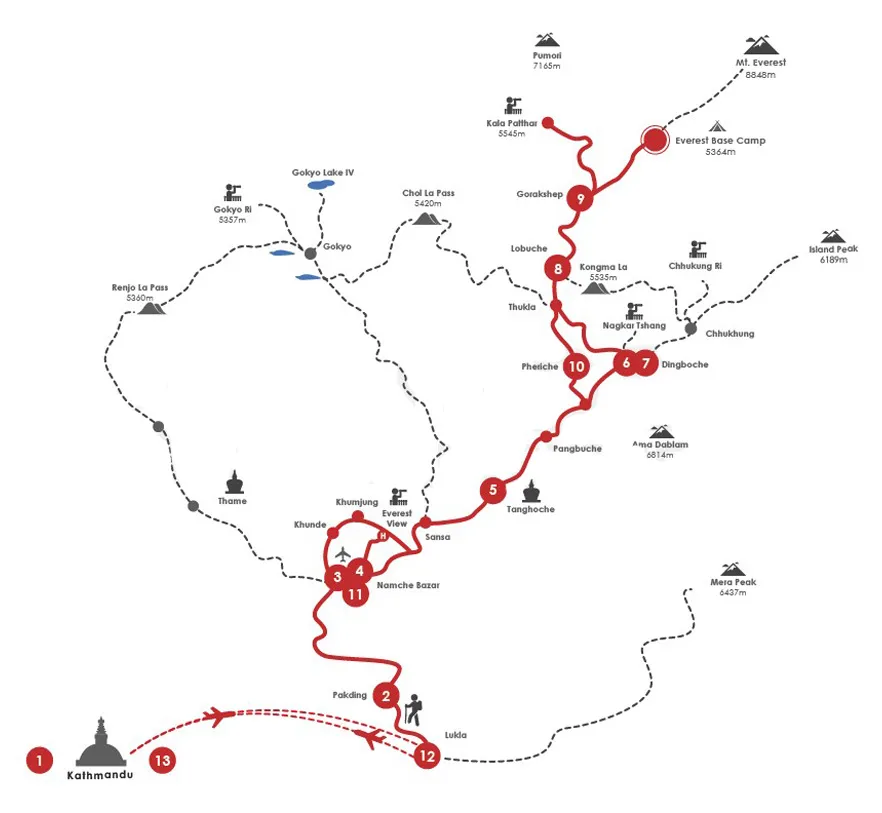
The main challenge is the altitude rather than technical terrain. The route climbs from Lukla through Namche Bazaar, Tengboche and Dingboche before reaching Gorak Shep and Everest Base Camp. Proper acclimatisation, a steady walking pace and enough rest are important as the altitude increases. The Nepal Tourism Board specifically recommends taking time to acclimatise rather than gaining altitude too quickly.
For the standard 12-day itinerary, expect several days of walking for around 5–8 hours, depending on the route, terrain and pace. Some days are shorter, while the Everest Base Camp and Kala Patthar section is more demanding because of the altitude and early-morning conditions.
Can Beginners Do the Everest Base Camp Trek?
Yes, beginners can complete the Everest Base Camp Trek if they are reasonably fit, prepare properly and follow a suitable itinerary with acclimatisation days. Previous high-altitude trekking experience is helpful but not essential.
The trek does require commitment. You should be prepared to walk on consecutive days, manage changing weather and cope with thinner air at higher elevations. The standard route includes acclimatisation stops in places such as Namche Bazaar and Dingboche, which help trekkers adjust before going higher. The Nepal Tourism Board also recommends gradual acclimatisation on the Everest route.
Beginners should not judge the trek only by distance. The combination of altitude, long walking days, cold temperatures and steep sections can make an otherwise manageable trail feel much harder.
How High Is Everest Base Camp and Kala Patthar?
Everest Base Camp in Nepal is at approximately 5,364 metres (17,598 feet) above sea level. Kala Patthar rises to about 5,545 metres (18,192 feet) and is higher than Everest Base Camp.
|
Point on the Trek
|
Approx. Elevation
|
|
Lukla
|
2,846 m
|
|
Namche Bazaar
|
3,440 m
|
|
Tengboche
|
3,860 m
|
|
Dingboche
|
4,410 m
|
|
Lobuche
|
4,940 m
|
|
Gorakshep
|
5,164 m
|
|
Everest Base Camp
|
5,364 m
|
|
Kala Patthar
|
5,545 m
|
The increase in elevation is gradual, but the final stages are physically demanding because the air contains less available oxygen at higher altitude. The route also passes through the Khumbu Glacier area near Everest Base Camp, where careful footing is important.
How Does High Altitude Affect the Trek?
High altitude can make normal walking feel considerably harder. You may notice shortness of breath, reduced appetite, tiredness, headache or dizziness, particularly as you climb above 2,500 meters. These can be symptoms of acute mountain sickness (AMS), which should not be ignored.
The best approach is to ascend gradually, walk at a comfortable pace, stay hydrated and pay attention to how you feel. Acclimatization days in the itinerary are important because they give your body time to adjust to the higher elevation.
Do not continue ascending if you develop worsening altitude symptoms. Severe headache, repeated vomiting, difficulty walking normally, confusion or breathlessness at rest require immediate attention and descent. The Nepal Tourism Board advises trekkers to descend when serious symptoms develop.
Do You Need Previous Trekking Experience for EBC Trek?
No, previous trekking experience is not mandatory for the Everest Base Camp Trek.
What matters more is your ability to walk for several hours on consecutive days and adapt to high-altitude conditions. Training before the trek can make the experience much more comfortable, particularly if you are not used to long uphill walks.
A guide also provides practical support on the trail and can help monitor your pace, route conditions and acclimatization. The current Nepal Tourism Board guidance lists the Everest Base Camp Trek among routes requiring a licensed trekking guide.
How Can You Prepare for the Everest Base Camp Trek?
Start training several weeks before departure, particularly if you do not regularly walk or exercise. Focus on building endurance rather than trying to train only for speed.
Useful preparation includes:
- Long walks and uphill hikes
- Stair climbing
- Cycling or other cardiovascular exercise
- Squats, lunges and step-ups
- Walking in your trekking boots
- Practising with your daypack
You do not need to be an elite athlete. Consistent preparation, sensible pacing and gradual acclimatization are more important than extreme fitness. Consistency is more useful than intense training for only a few days before departure.
Health, Safety and Physical Fitness
The Everest Base Camp Trek is achievable for travelers with a reasonable level of fitness, but the combination of long walking days, uneven trails, steep sections and high altitude requires proper preparation. You do not need technical mountaineering skills, but you should be comfortable walking for several hours on consecutive days.
Altitude is one of the main health considerations on the trek. As you climb higher, the lower oxygen level can affect your breathing, sleep, energy and appetite. A gradual ascent, proper acclimatization, sensible pacing and attention to your health are essential.
How Fit Do You Need to Be for the Everest Base Camp Trek?
You should have a good level of general fitness and endurance. Trekking days can involve several hours of walking, with regular uphill and downhill sections on rocky and uneven mountain trails.
You do not need to be an athlete or have previous mountaineering experience. The most important requirement is being able to walk comfortably for consecutive days while managing changes in altitude, terrain and weather.
How Should You Prepare Physically for the Everest Base Camp Trek?
Start preparing several weeks before the trek, particularly if long walks are not part of your normal routine. Focus on improving endurance, leg strength and overall stamina rather than short periods of intense exercise.
Regular hiking, brisk walking, stair climbing, cycling or similar cardiovascular activities can help build endurance. Squats, lunges and step-ups are useful for strengthening the legs for repeated climbs and descents.
It is also helpful to train in your trekking boots and with the daypack you plan to use. This allows you to identify any footwear or equipment problems before starting the trek.
How Can You Prevent Altitude Sickness?
Altitude sickness can develop as you gain elevation, particularly above 2,500 metres. The most important way to reduce the risk is to ascend gradually and allow enough time for acclimatization.
The best ways to reduce the risk of altitude sickness are:
- Ascend gradually
- Follow the acclimatization schedule
- Walk at a comfortable pace
- Drink enough safe water
- Avoid alcohol at higher elevations
- Tell your guide about symptoms early
Do not continue ascending if your symptoms are getting worse. Severe headache, repeated vomiting, confusion, loss of coordination or breathlessness at rest require immediate attention and descent.
Any medication for altitude sickness should be discussed with a qualified medical professional before the trek, particularly if you have an existing medical condition or take regular medication.
What Should You Do in an Emergency?
If you become seriously unwell or injured, inform your guide immediately. Depending on your condition, the safest response may be rest, medical treatment or descent to a lower elevation. Serious cases may require evacuation. For this reason, travel insurance that covers high-altitude trekking, emergency medical treatment and evacuation is strongly recommended. Check the policy's altitude limits and exclusions before travelling.
How Can You Stay Safe During the Trek?
Stay with your trekking group, follow your guide's advice, and use established trails. Walk carefully on steep, rocky or slippery sections, and be prepared for changing mountain weather, especially at higher elevations. Carry suitable clothing, rain and sun protection, a torch, a basic first-aid kit, and any essential personal medication.
Avoid alcohol at high altitude and pay close attention to how your body feels. If you experience symptoms of altitude sickness or become unwell, inform your guide and seek appropriate help.
Most importantly, do not put reaching Everest Base Camp ahead of your health. If your condition worsens, descending to a lower elevation may be the safest decision.
Guide, Porter and Trekking Staff for the Everest Base Camp Trek
A reliable trekking team makes a practical difference on the 12-day Everest Base Camp Trek. Your guide manages the route and daily arrangements, while porters carry the main luggage so you can walk with a lighter daypack. Local trekking staff also understand the Khumbu trails, changing mountain weather, teahouse system and local customs.
Will I Have a Guide on the Everest Base Camp Trek?
Yes. You will trek with an experienced, licensed guide who will lead the group, manage the daily itinerary, and assist with accommodation and other arrangements along the trail. A licensed guide is currently required for the Everest Base Camp Trek under Nepal's trekking regulations.
Your guide will also monitor your condition at high altitude, advise you on weather and trail conditions, and help you respond safely if you become unwell or face difficulties during the trek.
What Does the Trekking Guide Do?
The guide's role covers both practical arrangements and trekking support. Their main responsibilities include:
- Leads the group along the route
- Checks weather and trail conditions
- Arranges teahouse accommodation and meals
- Helps manage the daily schedule
- Monitors trekkers for altitude-related problems
- Helps with local communication
- Explains local culture and important places
- Coordinates assistance if an emergency occurs
Do I Need a Porter for the Everest Base Camp Trek?
A porter is not essential for the Everest Base Camp Trek, but hiring one can make the journey more comfortable. You can carry your own backpack if you are comfortable trekking with your gear, but a porter allows you to walk with a lighter daypack and save energy for the trail.
If you hire a porter, they will carry your main trekking bag while you keep your daily essentials, such as water, snacks, a jacket and personal items, in your daypack. We recommend keeping your load within the porter weight limit and packing only what you need for the trek.
How Much Weight Can a Porter Carry?
Porter loads should be kept within a safe and reasonable limit. For this trek, we generally plan around 15–20 kg per porter, depending on the group arrangement and the luggage being carried.
|
What
|
Who Carries It?
|
|
Main trekking bag
|
Porter
|
|
Daypack
|
Trekker
|
|
Water bottle or hydration bladder
|
Trekker
|
|
Passport, money and valuables
|
Trekker
|
|
Personal medication
|
Trekker
|
|
Camera and daily essentials
|
Trekker
|
Packing light is helpful for both you and the trekking team. Items that are not needed on the trail can usually be left safely in Kathmandu.
What Support Do Guides, Porters and Trekking Staff Provide?
The trekking team shares the work throughout the journey. Your guide focuses on route management, safety and daily coordination, while porters transport the main luggage between overnight stops.
Depending on your group arrangement, the staff can assist with:
- Daily route and schedule coordination
- Luggage transport
- Teahouse and meal arrangements
- Altitude and general wellbeing checks
- Local communication and practical arrangements
- Assistance when plans need to change because of weather or trail conditions
Himalayan Ecological Trekking works with local trekking staff who know the Everest region and its routes. We also aim to maintain fair and responsible working practices for the people who support your trek.
Everest Base Camp Trek Cost for 2026/2027
The Everest Base Camp Trek cost for 2026/2027 depends on group size, travel dates, flight arrangements and any additional services you request. At Himalayan Ecological Trekking, we provide clear pricing, experienced local staff and carefully arranged trekking services.
How Much Does the Everest Base Camp Trek Cost in 2026/2027?
Our 12-day Everest Base Camp Trek starts from USD 1476 per person. The quoted price is based on the services stated in your package itinerary. A full breakdown of inclusions and exclusions is provided separately before booking, so you know exactly what is covered.
We offer flexible group pricing, making the trek suitable for solo travelers, couples, families, friends and private groups.
How Does Group Size Affect the Everest Base Camp Trek Cost?
For many shared services, the per-person cost is lower in larger groups. Some trekking and logistical costs, such as guide and porter support, can be shared among group members, reducing the overall cost per person.
|
Group Size
|
Cost Per Person
|
|
1 Person
|
USD 1476
|
|
2-3 People
|
USD 1326
|
|
4–6 People
|
USD 1158
|
|
6–9 People
|
USD 1134
|
|
11+ People
|
USD 1100
|
For private or customized groups, the final price is confirmed according to the number of trekkers, travel dates and requested arrangements.
What Extra Expenses Should You Budget For?
Apart from the trek package price, you should allow some money for personal expenses along the trail. Common costs include hot showers, Wi-Fi, device charging, hot drinking water, snacks, drinks, toiletries, souvenirs and tips.
Prices often increase at higher elevations because goods and services are more difficult to transport and provide in remote mountain villages. Budgeting a little extra is sensible.
How Much Extra Money Should You Carry for the Everest Base Camp Trek?
For everyday personal expenses, carrying around US$150–300 per person can be a practical starting budget, depending on your spending habits. Your actual spending will depend on how often you use paid services and make personal purchases.
|
Personal Expense
|
Approximate Cost
|
|
Hot Shower
|
US$3–8 per shower
|
|
Wi-Fi / Internet
|
US$3–10 per access or package
|
|
Phone & Gadget Charging
|
US$2–6 per charge
|
|
Hot Drinking Water
|
US$1–5 per litre
|
|
Snacks & Drinks
|
US$2–8 per item
|
|
Toiletries & Personal Essentials
|
US$1–10+
|
|
Gifts & Souvenirs
|
US$5–50+
|
|
Tips for Guides & Porters
|
Optional; based on service and personal preference
|
Note: These are approximate costs and can vary by teahouse, location, season and altitude. Carrying sufficient Nepali Rupees (NPR) in cash is recommended, particularly for smaller purchases along the trekking route where card payments may not be available.
Important Note about Everest Base Camp Trek Costs
- Price Validity: The final Everest Base Camp Trek cost for 2026/2027 may change due to group size, travel dates, flight arrangements, accommodation availability and changes in local operating costs. The price confirmed at the time of booking will apply to your trip.
- Payment Fees: Bank, card and money-transfer fees are not included in the trek price and are payable by the traveller.
- Emergency Reserve: It is sensible to keep a small reserve for unexpected personal expenses, particularly if flight delays or itinerary changes require additional spending.
Money Exchange, ATMs and Card Payments for the Everest Base Camp Trek
Nepali Rupees (NPR) are the most practical currency for personal expenses on the Everest Base Camp Trek. Kathmandu has the widest choice of banks and authorised money exchangers, while access to cash and card payments becomes more limited as you travel deeper into the Khumbu. Preparing your cash before leaving Kathmandu makes spending on the trail easier.
Where Can You Exchange Money in Kathmandu?
Banks and authorised money exchangers are widely available in Kathmandu, particularly around Thamel, which is convenient for trekkers preparing for the Everest Base Camp Trek.
- Exchange before the trek: Exchange most of your foreign currency in Kathmandu, where you have more options than along the trekking route.
- Compare exchange rates: Rates can vary between authorised exchange counters, so checking a few providers can be useful.
- Carry clean notes: Torn, heavily marked or damaged foreign-currency notes may be difficult to exchange.
- Keep identification available: A passport or other identification may be required for currency-exchange transactions.
Are ATMs Available on the Everest Base Camp Trek?
ATMs are available in Kathmandu, Lukla and Namche Bazaar, but availability and reliability can vary. Mountain ATMs may experience connectivity, power or cash-supply problems, particularly during busy trekking periods.
For this reason, it is better not to depend entirely on ATMs during the trek. Withdraw enough cash in Kathmandu to cover your expected personal expenses, with some additional money as a reserve.
What Are the ATM Withdrawal Limits and Charges?
ATM withdrawal limits and charges vary by bank, ATM network and card issuer. The following figures provide a practical guide when planning your cash for the Everest Base Camp Trek.
|
ATM Cost
|
Typical Range
|
Approx. USD
|
What to Check
|
|
Per-Transaction Withdrawal Limit
|
NPR 20,000–35,000
|
~US$130–230
|
Your card and ATM limit
|
|
Daily Withdrawal Limit
|
NPR 50,000
|
~US$325
|
Your bank's daily overseas limit
|
|
Local ATM Fee
|
NPR 500–750
|
~US$3–5
|
Fee displayed before withdrawal
|
|
International Bank Fee
|
Varies by card issuer
|
Varies
|
Overseas withdrawal or transaction fees
|
|
Currency Conversion Fee
|
Varies by card issuer
|
Varies
|
Foreign-exchange and conversion charges
|
Note: These are approximate figures and not fixed rates for every ATM in Nepal. Limits and fees can vary by bank, ATM network and card type and may change over time. Check the fee displayed by the ATM and your bank's current overseas charges before travelling.
Can You Pay by Card During the Everest Base Camp Trek?
Card payments are widely available in Kathmandu and may also be accepted by some businesses in larger Khumbu settlements such as Namche Bazaar. However, cash remains the more practical payment method for most personal expenses on the trekking route.
Do not depend on card payments for smaller purchases such as hot showers, device charging, Wi-Fi, hot drinking water, snacks and drinks, particularly at higher elevations where payment facilities can be limited.
Is Cash Available and Accepted Along the Everest Base Camp Trek Route?
Yes. Nepali Rupees are the standard currency for everyday payments along the Everest Base Camp route, particularly at teahouses and mountain shops.
Carry smaller denominations where possible. NPR 100, NPR 500 and NPR 1,000 notes are useful for everyday purchases, as remote teahouses may not always have enough change for larger notes.
Keep your trekking cash secure and separate from your passport and other important documents.
How Much Cash Should You Carry for the Everest Base Camp Trek?
Your cash requirement depends on your personal spending and the services you use. For a 12-day trek, the US$150–300 personal-expense budget mentioned in the Cost section is a practical guide for routine spending.
You do not need to carry your entire travel budget in cash. Exchange or withdraw what you expect to need before leaving Kathmandu and keep a small reserve for unexpected expenses.
A separate US$100–200 emergency reserve can be useful as a personal travel buffer for unforeseen costs such as additional accommodation or meals caused by travel disruptions. Keep this reserve securely separate from your everyday spending money.
Practical Money Tips for the Everest Base Camp Trek
- Prepare your cash in Kathmandu before flying to Lukla.
- Carry smaller Nepali Rupee notes for everyday purchases.
- Do not depend entirely on ATMs or card payments in the mountains.
- Keep cash, cards and your passport secure and dry throughout the trek.
- Check your bank's international fees and withdrawal limits before leaving home.
Note: ATM availability, withdrawal limits, fees and card acceptance can change. Check the latest information with your bank before travelling and carry sufficient Nepali Rupees (NPR) for the services you expect to use along the trail.
Culture, History and Natural Wonders of the Everest Region
The Everest Base Camp Trek is more than a journey to the foot of Mount Everest. The route passes through the Khumbu, where Sherpa culture, Tibetan Buddhist traditions, historic mountain settlements, protected wildlife and dramatic Himalayan landscapes are closely connected.
Much of the route lies within Sagarmatha National Park, established in 1976 and inscribed as a UNESCO World Heritage Site in 1979. UNESCO recognises the park for its exceptional mountains, glaciers, deep valleys, biodiversity and the close relationship between the natural environment and Sherpa culture.
What Is the History of the Everest Region?
The Khumbu has been shaped by Sherpa settlement, trade, agriculture, Buddhism and mountaineering over generations. UNESCO notes that Sherpa communities have inhabited the region for around four centuries and that their cultural and religious traditions remain closely linked with the surrounding environment.
The region later became internationally known through Himalayan expeditions. The successful ascent of Mount Everest by Edmund Hillary and Tenzing Norgay on 29 May 1953 brought worldwide attention to the Khumbu and helped establish the region as a major destination for trekking and mountaineering.
Today, places such as Namche Bazaar, Khumjung, Pangboche and Tengboche provide glimpses of the region's long-standing mountain culture. Namche remains an important centre for the upper Khumbu, while traditional villages along the route show how communities have adapted to life in a high-altitude environment.
Who Are the Sherpa People and What Is Their Culture?
The Sherpa people are closely associated with the Khumbu region, and their culture has strong Tibetan Buddhist influences. Their traditions can be seen in local architecture, religious practices, festivals, community life and everyday customs.
During the Everest Base Camp Trek, Sherpa culture is naturally part of the journey. Along the trail, you may see:
- Stone-built villages
- Mani walls
- Prayer wheels
- Chortens
- Prayer flags
- Monasteries
- Local festivals
- Traditional mountain livelihoods
Sherpa communities have also played an important role in Himalayan trekking and mountaineering. Their knowledge of mountain terrain, weather and high-altitude conditions has supported generations of trekkers and climbers.
The best way to experience Sherpa culture is with respect. Ask permission before photographing people, dress appropriately when visiting religious sites, keep noise low around monasteries, and avoid touching or stepping over religious objects.
What Festivals and Cultural Traditions Can You Experience?
Festivals are an important part of Sherpa community life, particularly those connected with Tibetan Buddhism. Mani Rimdu at Tengboche Monastery is the best-known major festival associated with the main Everest trekking route. Nepal Tourism Board identifies Tengboche as a principal location for Mani Rimdu, known for religious gatherings and traditional masked dances.
Festival dates follow religious calendars and therefore change from year to year. A festival is not automatically part of every 12-day Everest Base Camp Trek, so travellers who want to experience one should check the dates before booking.
|
Festival or Cultural Event
|
Typical Period
|
Main Location
|
What You May Experience
|
|
Mani Rimdu
|
Usually October or November; dates vary annually
|
Tengboche
|
Buddhist prayers, ritual masked dances, religious ceremonies and blessings
|
|
Gyalpo Losar
|
Usually February or March; varies by Tibetan lunar calendar
|
Khumbu communities
|
Sherpa New Year traditions, prayers, family gatherings and community celebrations
|
|
Dumje
|
Dates vary by lunar calendar
|
Khumbu communities
|
Buddhist religious ceremonies and community traditions
|
|
Buddha Jayanti
|
Usually April or May; date varies annually
|
Buddhist communities in the Khumbu
|
Prayers, chanting, meditation and other religious observances
|
|
Everest Summit Day
|
29 May
|
Everest region
|
Commemorative activities marking the first successful ascent of Everest in 1953
|
Mani Rimdu is particularly relevant to EBC trekkers because Tengboche lies directly on the standard route. The wider festival cycle is traditionally described as lasting 19 days, with the public culmination taking place over three days. Nepal Tourism Board describes the Tengboche celebration as a three-day festival featuring famous masked dances by monks.
You do not need to travel during a festival to experience local traditions. Prayer flags, mani stones, prayer wheels, chortens and Buddhist practices are visible throughout the trekking season.
What Is Mani Rimdu and When Can You Experience It?
Mani Rimdu is a major Buddhist festival held at Tengboche Monastery, one of the most important cultural sites on the Everest Base Camp route. The wider festival cycle includes religious ceremonies conducted by monks, while the public culmination features prayers, ritual masked dances and other celebrations.
The Chham, or masked ritual dance, is one of the most recognisable parts of the public celebration. Monks perform religious dances accompanied by traditional music as part of the Buddhist ceremony.
The festival also involves sacred rituals and the creation and dissolution of a sand mandala, reflecting Buddhist teachings on impermanence. Because the dates follow the Buddhist calendar, trekkers planning their trip around Mani Rimdu should confirm the relevant year's dates before booking.
What Buddhist Monasteries Can You Visit on the Trek?
The Everest Base Camp trail passes several important Buddhist sites, offering trekkers an opportunity to experience the spiritual heritage of the Khumbu alongside its dramatic Himalayan scenery.
- Tengboche Monastery: It is the most prominent Buddhist monastery on the standard Everest Base Camp route. Situated at 3,867 metres on a ridge above the Imja Khola, it is renowned for its spectacular setting, with Ama Dablam forming the backdrop and Everest and Lhotse visible from the surrounding area. It remains an active Buddhist centre and is closely associated with the Mani Rimdu festival. The monastery was damaged by the 1934 earthquake and later destroyed by fire in 1989 before being rebuilt.
- Pangboche Monastery: Located in Pangboche, one of the traditional Sherpa villages on the main EBC route. The village lies between Tengboche and Dingboche and offers trekkers a closer look at local Buddhist traditions and community life.
- Khumjung Monastery: Located in Khumjung, near Namche Bazaar. It is not a required stop on the standard 12-day itinerary and can be visited as an additional excursion from Namche. The village provides further insight into Sherpa culture and Buddhist traditions.
- Thame Monastery: Located in the Thame Valley, this is a side-trip option rather than part of the standard 12-day EBC route. It is an important site within the wider religious and cultural heritage of the Khumbu.
Note: When entering a monastery, dress respectfully, keep noise low, follow local instructions and ask before taking photographs.
What Sacred Places and Landscapes Can You Experience?
The Khumbu is more than a dramatic mountain landscape. For the Sherpa people, many of its mountains, monasteries and religious features have deep spiritual significance and are closely connected with Tibetan Buddhist traditions.
Key sacred places and features along the Everest Base Camp route include:
- Mount Everest (Sagarmatha/Chomolungma): Mount Everest has deep cultural and spiritual importance for local communities and is treated with great respect. It is known as Sagarmatha in Nepal and Chomolungma in Tibetan traditions.
- Khumbila: A sacred mountain associated with the Khumbu and regarded in Sherpa tradition as a protector deity. Its spiritual importance is reflected in the respect local communities show towards the mountain.
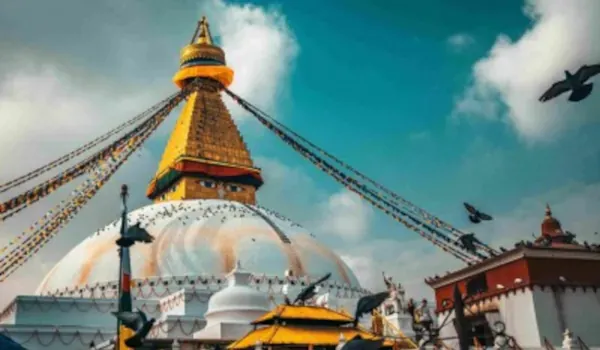
- Chortens and Mani Walls: These religious structures are found throughout the Khumbu. Mani walls are made from stones carved with Buddhist prayers, while chortens are Buddhist monuments representing teachings and devotion. Trekkers should pass them respectfully and, where possible, walk around them clockwise.
- Prayer Wheels and Prayer Flags: Prayer wheels are commonly placed near villages, monasteries and trails, while prayer flags are often seen on bridges, ridges and religious sites. They form an important part of the spiritual landscape and should not be stepped over, removed or damaged.
- Tengboche and Other Sacred Sites: Monasteries and religious sites in villages such as Tengboche and Pangboche remain important places of worship and community life. They provide a closer connection to the spiritual traditions of the Khumbu.
The landscape itself changes throughout the trek, from pine and rhododendron forests in the lower valleys to alpine terrain, rocky slopes, glaciers and snow-covered peaks at higher elevations. Features such as the Khumbu Glacier, surrounding mountains and high valleys are not only natural highlights but also form part of the wider cultural landscape that makes the Everest Base Camp Trek distinctive.
What Wildlife and Biodiversity Can You See in the Everest Region?
The Everest Base Camp trail passes through Sagarmatha National Park, a UNESCO World Heritage Site established in 1979. Covering about 1,148 square kilometres, the park protects a wide range of Himalayan habitats, from forests and river valleys to alpine meadows, glaciers and high mountain terrain.
Despite the harsh conditions, the Everest region supports a variety of wildlife and bird species. Some species found in and around the trekking area include:
|
Wildlife
|
Habitat / Where Found
|
What Trekkers Should Expect
|
|
Himalayan Tahr
|
Steep rocky slopes and high-altitude terrain
|
One of the more likely larger mammals to spot along the trail
|
|
Musk Deer
|
Forested areas and woodland habitats
|
Shy and difficult to spot in dense vegetation
|
|
Red Panda
|
Forests with bamboo and suitable vegetation at lower elevations
|
Rare and unlikely to be seen on the standard Everest Base Camp route
|
|
Snow Leopard
|
High-altitude rocky slopes and alpine areas
|
Extremely elusive; sightings by trekkers are exceptionally rare
|
|
Himalayan Monal (Danphe)
|
Forests, alpine meadows and mountain slopes
|
Nepal's national bird; may be seen in suitable habitats
|
|
Blood Pheasant
|
Forest and alpine environments
|
A distinctive Himalayan bird, but sightings are not guaranteed
|
|
Red-billed Chough
|
Cliffs, villages and open mountain terrain
|
Often seen flying around trekking areas and high-altitude settlements
|
|
Yellow-billed Chough
|
Rocky slopes, cliffs and high mountain areas
|
May be seen in open terrain at higher elevations
|
|
Himalayan Pika
|
Rocky areas and alpine slopes
|
Small and quick-moving; may be seen around rocky sections of the trail
|
|
Himalayan Marmot
|
Alpine meadows and rocky high-altitude areas
|
More likely to be seen during warmer months
|
|
Himalayan Griffon Vulture
|
Mountain valleys, cliffs and open slopes
|
Often seen soaring above valleys and mountain slopes
|
Birdlife is particularly noticeable along quieter sections of the trail. Choughs, Himalayan monals, blood pheasants and other mountain birds may be seen around forests, villages, rocky slopes and open alpine areas.
The vegetation changes noticeably with altitude. Lower sections around Lukla, Phakding and Namche include forests of pine, fir, birch, rhododendron, juniper and hemlock. In spring, blooming rhododendrons add colour to the lower valleys. Above the tree line, forests gradually give way to alpine shrubs, meadows, exposed rock, snow and ice.
Wildlife sightings are never guaranteed, particularly for snow leopards and red pandas. Trekkers are more likely to encounter Himalayan tahr, birds and smaller mountain animals. Keep a safe distance, never feed wildlife, and avoid disturbing animals or their habitats while trekking.
What Natural Wonders Can You See on the Everest Base Camp Trek?
The Everest Base Camp Trek takes you through some of the most impressive landscapes in the Khumbu, from green valleys and mountain forests to high-altitude glaciers and towering Himalayan peaks. As the trail climbs towards Everest Base Camp, the scenery becomes increasingly rugged and alpine.
Key natural wonders include:
- Mount Everest (8,849 m): The world's highest mountain becomes increasingly prominent as you trek deeper into the Khumbu. Kala Patthar (approximately 5,545 m) provides one of the best viewpoints for seeing Everest and the surrounding peaks.
- Lhotse (8,516 m), Nuptse (7,861 m) & Ama Dablam (6,812 m): These major Himalayan peaks dominate different sections of the route. Ama Dablam is particularly striking around Tengboche and Pangboche, while Lhotse and Nuptse become more prominent in the upper Khumbu.
- Khumbu Glacier: The Khumbu Glacier is one of the defining features of the upper Everest region. Its rugged moraine, ice formations and surrounding peaks create a dramatic high-altitude landscape near Gorak Shep and Everest Base Camp.
- Khumbu Icefall: The Khumbu Icefall is a constantly changing and hazardous section of the glacier used by climbers heading towards Everest. Trekkers can view parts of the icefall from established viewpoints but do not enter the climbing route.
- Kala Patthar: At approximately 5,545 metres, Kala Patthar is the highest point reached on this 12-day itinerary. It is well known for panoramic views of Everest, Lhotse, Nuptse and Pumori, with early morning often offering particularly clear mountain views.
- Dudh Koshi Valley: The trail follows the Dudh Koshi, or Milk River, through the lower Khumbu. The route passes through deep valleys, forests, waterfalls and suspension bridges, with the surrounding scenery changing as you gain elevation.
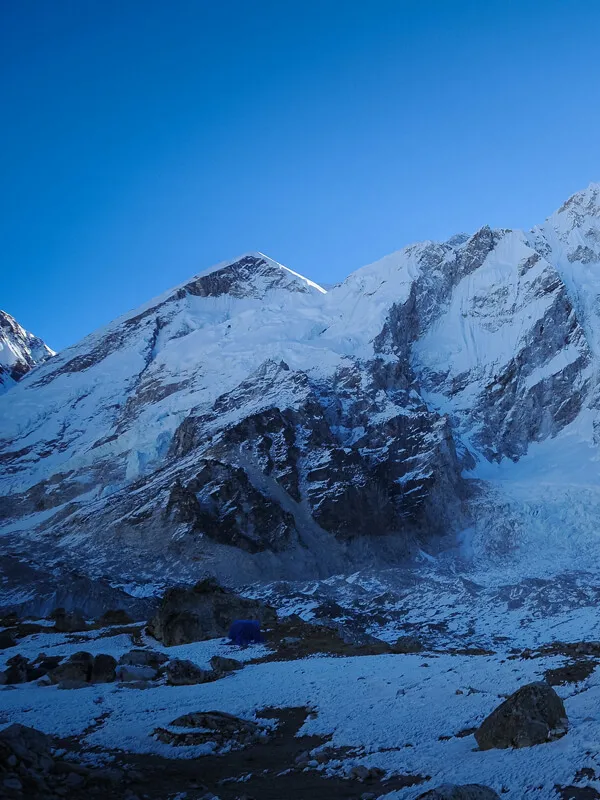
- Sagarmatha National Park's High-Altitude Landscape: Above the tree line, forests gradually give way to alpine vegetation, rocky slopes, glaciers and barren high-altitude terrain. The contrast between the greener lower valleys and the stark upper Khumbu is one of the most noticeable changes during the trek.
The combination of high Himalayan peaks, glaciers, valleys, rivers and changing vegetation gives the Everest Base Camp Trek its distinctive character and makes the journey as much about the landscape as reaching Base Camp.
How Does Himalayan Ecological Trekking Support Sustainable and Responsible Trekking?
At Himalayan Ecological Trekking, we believe tourism should benefit local communities while respecting Nepal's natural and cultural heritage. Our approach to responsible trekking includes:
- Supporting local communities: We work with local guides, porters, teahouses and other local service providers.
- Responsible employment: We work with local trekking staff and aim to maintain responsible working arrangements.
- Respecting local culture: We encourage travelers to respect Sherpa traditions, Buddhist sites, villages and local customs.
- Reducing unnecessary waste: We encourage responsible use of resources and reduced reliance on unnecessary single-use plastic.
- Supporting community initiatives: Our company has a long-standing commitment to social and community causes.
- Protecting the environment: We encourage trekkers to carry waste properly, use refillable bottles where practical and avoid damaging natural or cultural sites.
Himalayan Ecological Trekking has been operating since 1995, with a focus on local expertise and responsible travel in Nepal. Our current company information also highlights community-focused and responsible tourism commitments.
For travelers, responsible trekking is also simple: carry your waste, use water carefully, respect local customs, stay on established trails and treat the people and places you visit with respect.
Can You Book the Everest Base Camp Trek at the Last Minute?
Yes. Last-minute bookings are possible for the Everest Base Camp Trek, subject to availability. Himalayan Ecological Trekking currently states that Nepal trips can be booked up to 7 days before departure, although arrangements depend on the availability of flights, accommodation, guides, porters and other services. For a last-minute booking, provide:
- Preferred departure date
- Number of trekkers
- Passport details
- Any dietary or personal requirements
- Preferred accommodation or other special requests
Note: Last-minute bookings are more challenging during the main spring and autumn seasons because Lukla flights and teahouses can become busy. Where your preferred arrangements are unavailable, we will discuss the practical alternatives before confirming the trek
Can You Extend Your Everest Base Camp Trek?
Yes. The 12-day Everest Base Camp Trek can be extended or customised if you have additional time. Himalayan Ecological Trekking offers customised trip planning, allowing you to add destinations, extra days or activities based on your interests and schedule.
Some popular options include:
|
Extension or Trekking Option
|
What You Can Add or Experience
|
|
Gokyo Lake Trek
|
Explore the Gokyo Lakes and climb Gokyo Ri for panoramic Himalayan views.
|
|
Everest Three Passes Trek
|
Cross Kongma La, Cho La and Renjo La while exploring remote parts of the Everest region.
|
|
Everest Cho La Pass Trek
|
Cross Cho La Pass and explore the Gokyo Valley and Gokyo Lakes.
|
|
Pikey Peak Trek
|
A separate trek in the Everest region, known for wide views of Everest and the surrounding Himalayas.
|
|
Gokyo Renjo La Pass Trek
|
Explore the Gokyo Lakes, climb Gokyo Ri and cross Renjo La Pass.
|
Note: Any extension or additional trekking option will affect the total trip duration and cost. We will confirm the revised itinerary and any additional arrangements before your booking is finalised.
How Do You Book the Everest Base Camp Trek?
Booking the Everest Base Camp Trek with Himalayan Ecological Trekking is straightforward. Send us your preferred travel dates, group size and any special requirements, and our team will help you confirm the itinerary and arrangements.
1. Send Your Trek Enquiry
Send us your:
- Preferred travel dates
- Number of travellers
- Nationality
- Special requirements
- Preferred trekking arrangements
You can also let us know if you would like to customize the standard 12-day itinerary.
2. Confirm the Itinerary and Cost
We will confirm the itinerary, group arrangements, accommodation, flights and applicable services according to your travel dates.
For private or customised departures, the final cost is calculated according to the group size and requested services.
3. Provide Your Booking Details
Once you decide to proceed, provide the passport and traveller information needed for the flight, permits and trekking arrangements.
4. Make the Payment
Himalayan Ecological Trekking accepts payment by credit card or SWIFT/wire transfer. A 4% processing fee applies to credit card payments. Any bank or money transfer fees for wire payments are the responsibility of the client and are not included in the trek price.
How to Pay by Credit Card
For credit card payments, use our secure online payment page, complete the required details and follow the instructions to make your payment.
Make a Secure Credit Card Payment
How to Pay by SWIFT / Wire Transfer
Payment can be made directly to our company bank account using the following details:
|
Bank Details
|
Information
|
|
Account Name
|
Himalayan Ecological Trekking Pvt. Ltd.
|
|
Account Number
|
12000076670027
|
|
Bank Name
|
Himalayan Bank Ltd.
|
|
Account Type
|
Foreign Currency (USD)
|
|
Branch
|
Hiti Durbar
|
|
Bank Address
|
Tridevi Marg, Thamel, Kathmandu, Nepal
|
|
SWIFT Code
|
HIMANPKA
|
Note: Any bank, transfer or payment service charges related to the payment or deposit are the responsibility of the client. Please ensure that the full agreed payment amount is received in our company account after any applicable fees.
5. Receive Your Booking Confirmation
Once the required payment and traveller details have been received, we confirm the trip and proceed with the necessary arrangements for your arrival in Kathmandu and the Everest Base Camp Trek.
Booking Note: For the best choice of travel dates, Lukla flights, accommodation and trekking staff, we recommend booking in advance, especially during the main spring and autumn trekking seasons. Last-minute bookings may also be possible, subject to availability.